
Published:
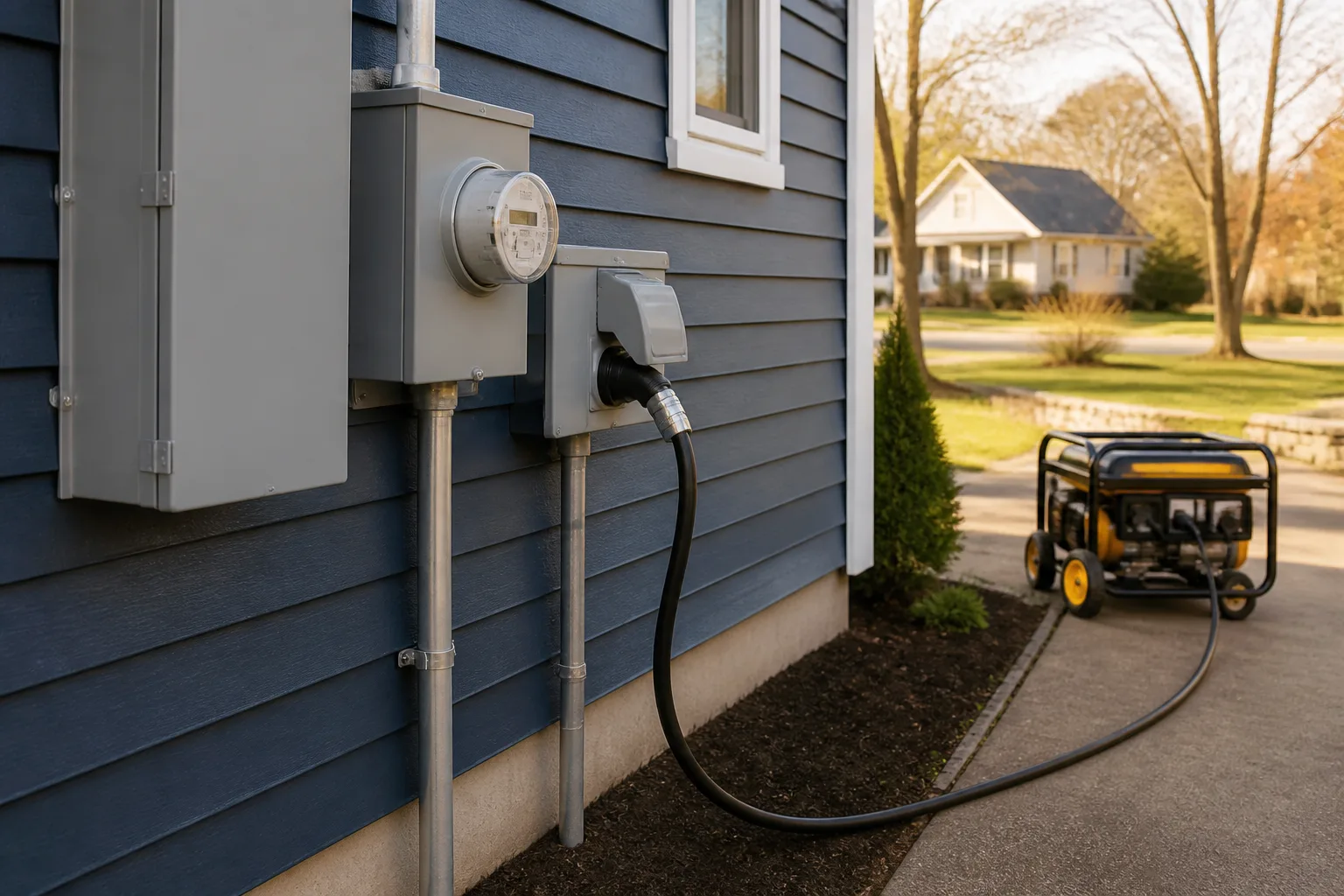
A generator inlet is a fixed connection point that allows a compatible portable generator to supply a properly configured electrical system. It replaces the need to route multiple extension cords through doors or windows, but the inlet alone is not the complete safety system.
The inlet and the generator must match
The inlet rating and configuration must be compatible with the generator output and connecting cord. The proposed generator, intended loads, and property electrical system all help determine the appropriate setup.
Transfer equipment prevents backfeeding
Transfer equipment or an approved interlock arrangement keeps utility power and generator power from feeding the system at the same time. That separation is essential. Backfeeding can endanger utility workers, occupants, equipment, and the generator.
Never connect a generator to a building by energizing a receptacle with a cord that has exposed male ends. That unsafe practice bypasses proper transfer protection and creates energized exposed parts.
Plan which loads matter most
A portable generator has a limited output. Think about which circuits are important during an outage and whether those loads can operate within the generator’s capacity. Large electric heating, cooling, cooking, or water-heating loads may use a substantial portion of that output.
An electrician can help explain how the inlet and panel equipment relate, but the generator must still be operated within its manufacturer instructions.
Safe generator location still matters
A generator inlet does not make it safe to run an engine indoors or in an attached garage. Portable generators produce carbon monoxide and must be operated outdoors in accordance with the manufacturer guidance, away from openings where exhaust can enter the building.
Stephens Electric provides generator inlet installation across Anderson, Oconee, and Pickens counties.