
Published:
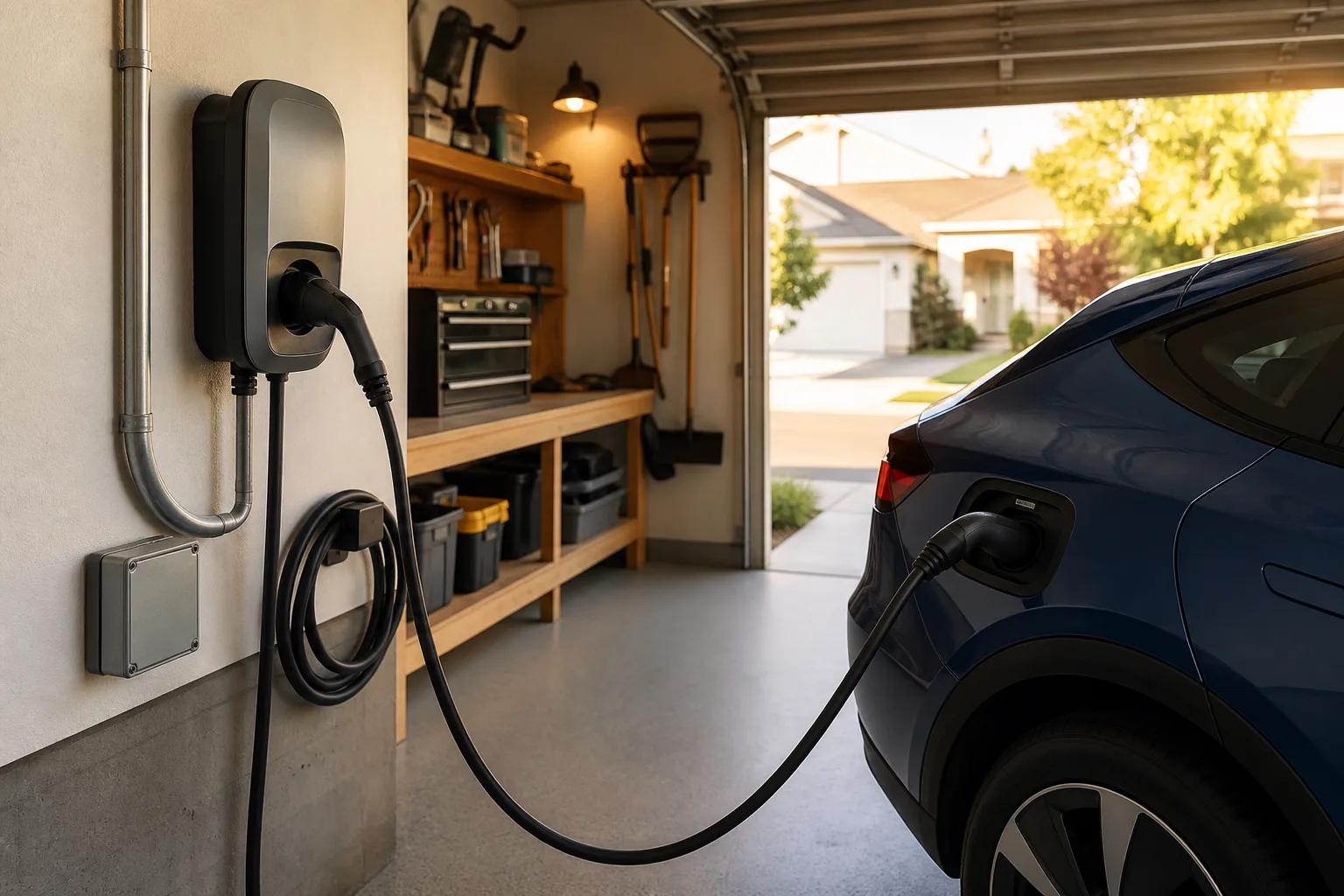
The charger on the wall is only the visible part of an EV charging installation. Behind it are the circuit, overcurrent protection, wiring route, connection method, panel capacity, and the charging equipment’s listed requirements.
Start with the actual charging equipment
Collect the manufacturer and model, installation instructions, rated input, and whether the unit is intended to be hardwired or connected by a receptacle. Different chargers can call for different circuit sizes and configurations.
The vehicle’s charging capability also matters, but it does not replace the charger’s electrical requirements.
Let the panel and load be assessed
An electrician can review the existing service and panel, connected loads, available spaces, and the proposed charger demand. An EV charger does not automatically mean the panel must be upgraded. The assessment determines what the existing system can support and what options fit the property.
Think about the route and daily use
Before the visit, consider:
- Where the vehicle normally parks
- Where the charging cord needs to reach without becoming a trip hazard
- Whether the equipment will be indoors, in a garage, or exposed to weather
- The distance and obstacles between the electrical panel and charger location
- Whether future parking or vehicle changes should influence placement
The shortest route is not always the most practical location, and the most convenient location may affect installation complexity.
Avoid temporary wiring as a permanent charging plan
High, sustained electrical loads deserve a circuit and connection designed for them. Do not rely on improvised adapters, damaged receptacles, unlisted extension arrangements, or equipment that does not match the supply.
Questions to ask
Ask what circuit is being proposed, whether the charger will be hardwired, how the cable or conduit will be routed, and whether any panel work is part of the quote.
Stephens Electric provides EV charger installation for residential and commercial properties in Anderson, Oconee, and Pickens counties.